Posts

IB History Final Exams - An Example Syllabus Breakdown
Image
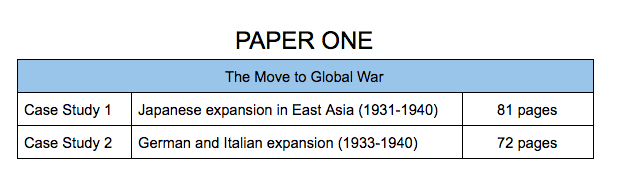
IB History Final Exams - An Example Syllabus Breakdown The IB History syllabus is notoriously difficult to wrap one's head around because the syllabus is just so long and has essentially infinite topics to choose from for your final exams! In preparation for my final exams, I created tables of each topic being covered in our class and how many pages were in each. Below each table, I included the important things that need to be considered when choosing the topics and what the minimum selections are for each paper. At the end, I've included a summary of what the absolute minimum could potentially be for an SL and HL student according to the topics we've covered in class and could be useful to anyone looking for a way to clarify what exactly to think of the IB History Finals, and what exactly should be studied for each paper!

From Middle School to IB: How are they different?

Image
The IB can be a treacherous place for newcomers from middle school, but what exactly is different? Today, I'll be talking about some of the many ways in which studying in the IB is a bit different from middle school! How different is the workload? The general consensus on the IB workload is that it's barely tolerable and is super difficult to get through: as soon as you get home from studying at school, you study at home until you sleep and you have NO time for extracurriculars or socialisation. Well, I do have to admit that the longer you're in the IB, the more work you have. My middle school experience: While in middle school, I didn't get that much homework (at most maybe an hour per night worth of work if I really wanted to dedicate myself to getting perfect marks). During 7th grade, I had an incredibly average GPA of around 8.4 according to the Finnish grading system out of 10: not terrible, but definitely not even close to the best GPA in class....

IB Study Techniques: History & Psychology

Image
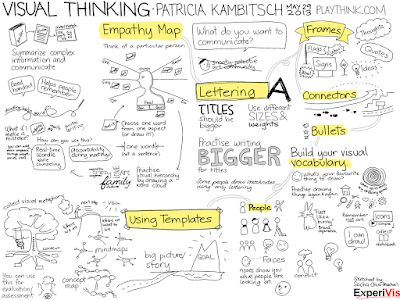
All students strive to find the way that they absorb all the information they study as best as possible. But when you're hearing information from everywhere and how everyone studies in completely different ways, it can get confusing and make you feel worried that you're not studying in the 'correct' or best way possible. Believe me, I had the exact same confusion when I started to properly study and had no idea which techniques would actually be worth my time. Well, as it turns out, I want to talk about the way I study for my different subjects and the types of notes I write to ensure I remember the material as best as I can. On top of this, I'll be giving a rundown of the 2 very well known 'ways of learning': through visual and auditory means. Identifying which type of learner you are is super important. Ever since really understanding the best technique for me, I feel I understand myself a lot better and know what to expect when I study. So, with that b...

Plan B: What to do if you don't get into IB

Image
Today is the day. It's the day you get to see who got in to the IB, and who didn't. Your heart is pounding and your friends are texting frantically about which acceptance page they have open. You, along with hundreds of other students, are continuously refreshing the page with wide eyes and adrenaline coursing through your veins. The clock on your bedside table ticks over to 07:59. You have one minute until results are published. You begin to count down the seconds until the moment you get to know if you got into the IB or not. The minute feels like an hour, a day, a lifetime, but it finally comes. The clock strikes 08:00 and you hit refresh once more. The results have been published.  You immediately begin sifting through the names faster than you can even properly read what they're saying and everything seems to be a blur. You realise that the names are organised in alphabetical order and you stop sifting for a moment and skip straight to the section your na...

Why join EYP in IB?

Image
You might have been seeing a few mentions of EYP floating around this website, popping up randomly whenever I mention a recent trip I went on or something. Well, in this post I will be telling you why you, as a European, should be joining EYP (the European Youth Parliament)! It's an incredible volunteer-run organisation that deserves much more attention than it gets. If I'm being completely honest, you won't leave EYP without having extra knowledge: you will create friendships that will last for a lifetime (cheesy, I know), learn about politics, current affairs and (most importantly) yourself. So, what exactly are the benefits of joining EYP? 1. You learn about current affairs and collaboration The European Youth Parliament, as the name suggests, is a simulation of what the European Parliament actually does when dealing with different issues within the EU. This makes it a super fascinating experience where you can actually get super in-depth kno...

IB Poetry Analysis: Definitions

Image
Rhyme scheme: When analysing poetry in the IB, its super common to refer to the rhyme structure of certain pieces using bundled up letters like ABAB CDCD or ABBA, and this can be confusing if you aren't familiar. To find the rhyme scheme, we are going to be looking at the sounds at the end of each line. For example: I do not like green eggs and ham. I do not like them Sam I am. I do not like them in a boat. I do not like them with a goat. - Green Eggs and Ham, Dr. Seuss When you pay attention to the sound at the ending of the line, you may notice a pattern: ham rhymes with am and boat rhymes with goat. Therefore, this follows the rhyme scheme of AA BB ( ham/am /boat/goat) An example of a more hidden rhyme scheme could be: Bid me to weep, and I will weep, While I have eyes to see; And having none, yet I will keep A heart to weep for thee. If you apply the same knowledge to this his rhyme scheme is A B A B ( weep / see / keep / thee ) Pastoral poem:...

PreIB POEM ANALYSIS

Image
PreIB POEM ANALYSIS: TO MY SISTER BY WILLIAM WORDSWORTH Before you read on, I would like to remind you that this was written in PreIB and I WOULD NOT recommend you approach a text in the same way I do here in later poem analyses in IB1 and IB2. However, I found that organising my notes in this way when analysing really helped me get a very basic understanding of the structure of the poem and the writer's possible underlying message. I'd like to say, though, that I haven't included any notes really on the impact on the reader of the poem , which arguably is one of the most important parts of analysing a poem. However, for some type of knowledge about what type of analysis I started with and how I organised it, read on: THE POEM ITSELF   TO MY SISTER BY WILLIAM WORDSWORTH IT is the first mild day of March: Each minute sweeter than before, The Redbreast sings from the tall larch That stands beside our door. There is a blessing in the air,  ...