Posts

Showing posts with the label hl

How to Ace Your Psych IA: Step-By-Step

Image
The Psychology Internal Assessment (IA) is one of the most challenging components of the IB for many students, however doing well in this IA requires you following very straightforward steps. By going very thoroughly and methodologically through the requirements of the IB criteria and this list of sentence by sentence guidance, you are definitely on your way to acing the Psych IA and getting that idolised 7. While these steps can be adjusted and more can be added to your own IA as this assignment is different for every student and study, I have tried to make each step as basic as possible so anyone can do well on their Psych IA (even if you have a bad teacher or are just very confused!) I have spent many hours compiling together guidance for every section of the Psych IA, the appropriate amount of sentences and paragraphs for each section, and what they should individually cover and how. As such, I have split this guide into 2 parts, where one is Planning Your Psychology IA  and...

Unpacking What IB Subjects You Should Take

Image
Picking your subjects is probably one of the hardest choices you can make during the IB, considering that you're going to be stuck with the choice for the next 2 years. I also had to make this decision, and realised that choosing the subjects might've been easier if someone had actually told me what to expect from each subject before entering them. Here, I have compiled a list of the subjects I took during my time in the IB and analysed each one in terms of their workload, assignment difficulty, and what to expect from teachers/lectures. The subjects covered are:  Math Standard Level (SL) /Higher Level (HL) Environmental Systems and Societies (ESS) Psychology History English Lang&Lit Math SL/HL Math is a compulsory subject for all IB students around the world, and begs the question as to what level is the right one for you: SL or HL? This question has evolved for more recent IB students to taking Analysis & Approaches or Applications & Int...

IB History Final Exams - An Example Syllabus Breakdown

Image
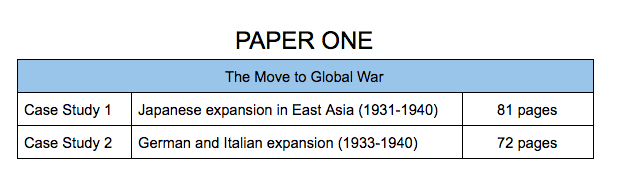
IB History Final Exams - An Example Syllabus Breakdown The IB History syllabus is notoriously difficult to wrap one's head around because the syllabus is just so long and has essentially infinite topics to choose from for your final exams! In preparation for my final exams, I created tables of each topic being covered in our class and how many pages were in each. Below each table, I included the important things that need to be considered when choosing the topics and what the minimum selections are for each paper. At the end, I've included a summary of what the absolute minimum could potentially be for an SL and HL student according to the topics we've covered in class and could be useful to anyone looking for a way to clarify what exactly to think of the IB History Finals, and what exactly should be studied for each paper!

IB Study Techniques: History & Psychology

Image
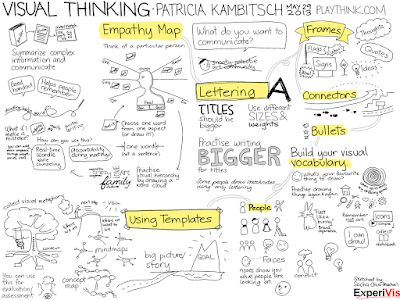
All students strive to find the way that they absorb all the information they study as best as possible. But when you're hearing information from everywhere and how everyone studies in completely different ways, it can get confusing and make you feel worried that you're not studying in the 'correct' or best way possible. Believe me, I had the exact same confusion when I started to properly study and had no idea which techniques would actually be worth my time. Well, as it turns out, I want to talk about the way I study for my different subjects and the types of notes I write to ensure I remember the material as best as I can. On top of this, I'll be giving a rundown of the 2 very well known 'ways of learning': through visual and auditory means. Identifying which type of learner you are is super important. Ever since really understanding the best technique for me, I feel I understand myself a lot better and know what to expect when I study. So, with that b...

IB Poetry Analysis: Definitions

Image
Rhyme scheme: When analysing poetry in the IB, its super common to refer to the rhyme structure of certain pieces using bundled up letters like ABAB CDCD or ABBA, and this can be confusing if you aren't familiar. To find the rhyme scheme, we are going to be looking at the sounds at the end of each line. For example: I do not like green eggs and ham. I do not like them Sam I am. I do not like them in a boat. I do not like them with a goat. - Green Eggs and Ham, Dr. Seuss When you pay attention to the sound at the ending of the line, you may notice a pattern: ham rhymes with am and boat rhymes with goat. Therefore, this follows the rhyme scheme of AA BB ( ham/am /boat/goat) An example of a more hidden rhyme scheme could be: Bid me to weep, and I will weep, While I have eyes to see; And having none, yet I will keep A heart to weep for thee. If you apply the same knowledge to this his rhyme scheme is A B A B ( weep / see / keep / thee ) Pastoral poem:...

PreIB POEM ANALYSIS

Image
PreIB POEM ANALYSIS: TO MY SISTER BY WILLIAM WORDSWORTH Before you read on, I would like to remind you that this was written in PreIB and I WOULD NOT recommend you approach a text in the same way I do here in later poem analyses in IB1 and IB2. However, I found that organising my notes in this way when analysing really helped me get a very basic understanding of the structure of the poem and the writer's possible underlying message. I'd like to say, though, that I haven't included any notes really on the impact on the reader of the poem , which arguably is one of the most important parts of analysing a poem. However, for some type of knowledge about what type of analysis I started with and how I organised it, read on: THE POEM ITSELF   TO MY SISTER BY WILLIAM WORDSWORTH IT is the first mild day of March: Each minute sweeter than before, The Redbreast sings from the tall larch That stands beside our door. There is a blessing in the air,  ...